Kids today don’t just learn about food, health, and bodies at the dinner table or in school. They learn from livestreams, social feeds, gaming platforms, and influencers—often before adults even realize those messages are shaping how kids think about eating, appearance, and self-worth.
From “What I Eat in a Day” videos to fitness challenges and filtered body ideals, digital spaces are filled with advice and imagery that can feel confusing, overwhelming, or impossible to live up to. Some content sparks creativity or curiosity. Other messages quietly reinforce unrealistic standards, diet culture, or rigid ideas about what “healthy” should look like.
As parents and caregivers, we often feel caught in the middle: wanting to protect kids without overreacting, wanting to talk, but not always knowing how to start.
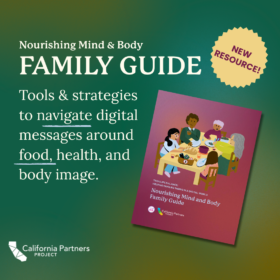
That tension is exactly what inspired our newest Tech/Life Balance resource, Nourishing Mind & Body, created by California First Partner Jennifer Siebel Newsom and the California Partners Project. The guide was designed to help families navigate digital messages about food, bodies, and health with less fear and more connection.
Why food and tech conversations feel so hard right now
Food is deeply personal. So are bodies. Add algorithms into the mix, and conversations get even more complicated.
Digital platforms don’t just reflect kids’ interests; they amplify them. A teen curious about fitness may quickly be fed extreme workout content. A child watching cooking videos may be exposed to diet trends or food marketing disguised as “wellness.” Algorithms don’t distinguish between helpful guidance and harmful pressure, and kids aren’t always equipped to do that alone.
What we heard again and again from families is this: They don’t want another list of rules. They want tools to talk, notice, and respond—without shame.
Research and lived experience both tell us that connection is one of the strongest protective factors for kids navigating online influence. When children feel safe asking questions and sharing confusion, they’re better able to push back on harmful messages and develop confidence in their own choices.
Starting with ourselves matters more than we think
One of the most important insights behind the Nourishing Mind & Body guide is that conversations don’t start with kids; they start with adults.
The messages we grew up with about food, weight, and health still shape how we talk today, often unconsciously. When we pause to reflect on our own habits and language, we’re better prepared to model balance rather than perfection.
That modeling matters. Kids notice when adults label foods as “good” or “bad.” They hear comments about dieting or bodies, even when those comments aren’t directed at them. And they’re watching how we engage with screens during meals and daily routines.
The goal isn’t to be flawless. It’s to be aware, honest, and willing to learn alongside them.
Shifting from control to conversation
Rather than focusing on restricting content or policing behavior, the Nourishing Mind & Body resource emphasizes a different approach: naming concerns, asking open questions, and building trust over time.
Families told us they wanted help recognizing what pressures might be showing up, whether that’s body comparison, influencer marketing, food guilt, or screens creeping into mealtimes.
Once concerns are named, conversations become more focused and less reactive. Simple, age-appropriate questions can open powerful doors:
- How does that video make you feel?
- Do you notice certain foods or body types showing up over and over online?
- What do you think that account is trying to sell or promote?
These aren’t “gotcha” questions. They’re invitations—signals to kids that adults are curious, not judgmental.
Reclaiming everyday moments of presence
One theme surfaced consistently across research and caregiver voices: small, everyday moments matter more than grand solutions.
Cooking together. Sharing a meal, even if it’s takeout. Putting phones down for ten minutes instead of aiming for perfection. Family meals, in particular, remain one of the most consistent spaces for connection across cultures and circumstances.
When screens are set aside, kids are more likely to tune into hunger cues, conversation, and each other. And when screens are around? Balance, not guilt, is key. The goal is awareness, not all-or-nothing rules.
Helping kids build digital and media literacy around food and bodies
Critical thinking is an essential life skill, especially when it comes to food and health content. Kids benefit from learning to ask:
- Is this real or edited?
- Who made this—and why?
- How does this content make me feel?
When adults model these questions out loud, kids learn to slow down and reflect—skills that extend far beyond food content.
Connection is more powerful than any algorithm
Technology isn’t going away. Neither are messages about food and bodies. But families don’t need to face these pressures alone—or perfectly. The Nourishing Mind & Body guide was created to offer families practical entry points, not one-size-fits-all solutions. We recognize that healthy choices look different across families, cultures, and circumstances—and that trust grows through conversation, not control.
In a digital world where algorithms reign supreme, connection is the antidote. When we listen, model curiosity, and stay open, we help kids cut through the noise and remind them that their value isn’t defined by how they look, but by who they are.
.The Nourishing Mind and Body guide is available now in both English and Spanish. Explore and download the guide here: calpartnersproject.org/techlifebalance/nourishing.