In October, I finally had the opportunity to participate in a conference I’ve had my eye on for many years but never had the chance to attend: The Meaningful Play Conference. I’ve returned from Pittsburgh inspired and energized.
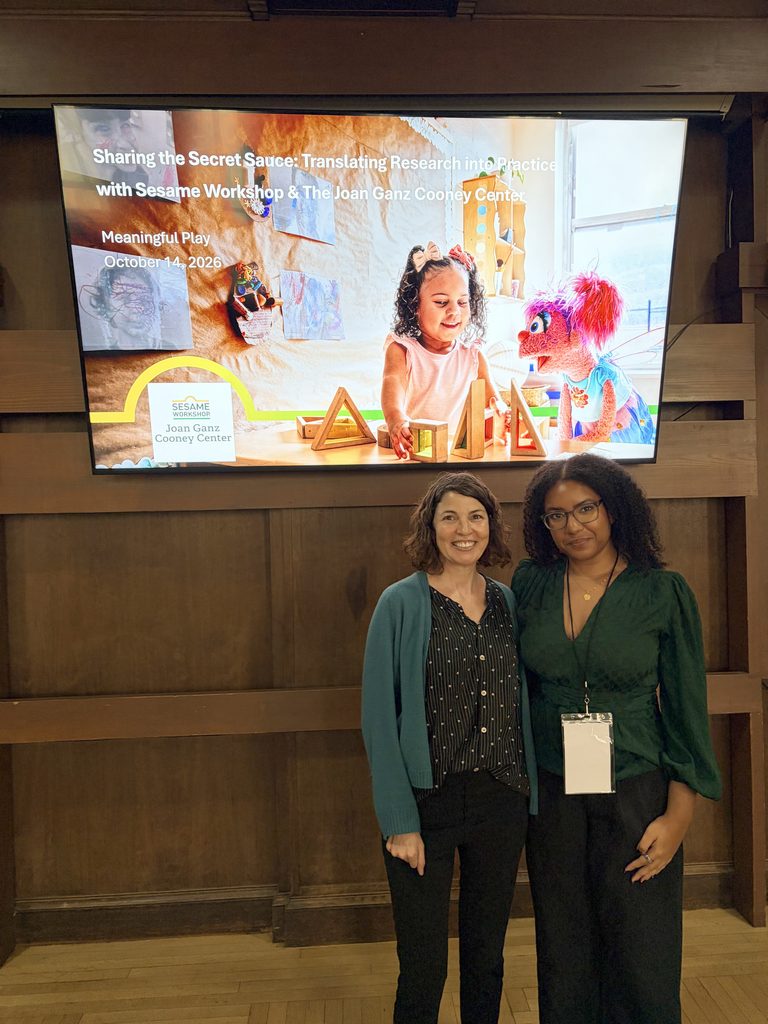
My colleague, Senait Solomon (Sr. Manager, Content Research & Evaluation), Sesame Workshop) and I hosted a workshop called Sharing the Secret Sauce: Translating Research into Practice with Sesame Workshop & The Joan Ganz Cooney Center, where we focused on a challenge at the heart of creating meaningful play experiences: how do we translate research into practice?
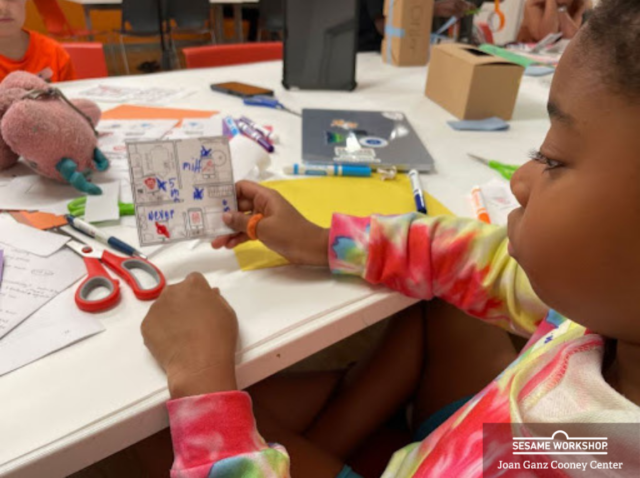
We explored different approaches to center kids in the design process through case studies, interactive activities, and collaborative discussion. It was an opportunity to reflect on the importance of bringing research, design, and practice together, and participants left with a concrete plan to design a process that includes children’s voices in their work, using our newly launched Co-design With Kids Toolkit as a resource. That theme was present throughout the conference and was echoed in conversations about educational games, public media, and designing with children rather than simply for them.
One session that particularly resonated with me, From Vision to Collective Action: Building the Public Games Cooperative, explored the emerging Public Games Cooperative, an effort to build a public media infrastructure for games. Inspired by the legacy of Joan Ganz Cooney, Sesame Street, and PBS, David Gagnon from Field Day Labs addresses an important question: What could we accomplish if games had a public media infrastructure of their own?
Through his work on Vault Learning Games, a curated distribution platform for free, quality learning games, and Open Game Data, an infrastructure and community for collecting and analyzing game data at scale, Gagnon’s initiatives address the challenges of ensuring that high-quality, standards-aligned playful learning resources are free and continually available to educators, and fit into the realities of a school day. Efforts like these could help educators discover trusted games, developers improve their work, and researchers better understand how people learn through play.
Greg Walsh’s workshop, Designing Play With, Not For: A Workshop on Incorporating Co-Design Techniques Into the Creation of Children’s Play Experiences was an excellent follow-up to our session, with a more academic dive into co-design. He reinforced this important perspective on meaningful play: the people affected by a design should have a voice in shaping it. (In fact, he is one of the featured voices in our Co-Design with Kids Toolkit!)
Walsh explained that in the product design process, children are often treated as users or testers, invited to provide feedback after adults have already made the big decisions. Co-design takes a different approach by treating children as partners in the creative process. His workshop also highlighted the importance of thoughtful facilitation: creating a welcoming environment, accounting for individual needs, offering different ways to communicate and contribute ideas, and making space for children to share their thinking as equal design partners all contribute to meaningful participation. Co-design isn’t simply about asking children what they think. It’s about recognizing their expertise and giving them a genuine role in shaping the outcome.
Across these sessions and three days at the conference, it was clear that meaningful play cannot happen in isolation. It’s dependent on the people, relationships, systems, and practices that support it. We need to keep strengthening connections between research and design, find sustainable ways to distribute games and playful experiences for public good, and create processes and opportunities that give children and communities a meaningful voice in shaping the very things meant for them to use. We also need to continue sharing data, tools, and lessons learned so each new project can build on what already exists. Whether we’re translating research into practice, building infrastructure for educational games, or co-designing with children, we’re working toward the same goal: creating experiences that reflect people’s real needs and make a lasting difference.