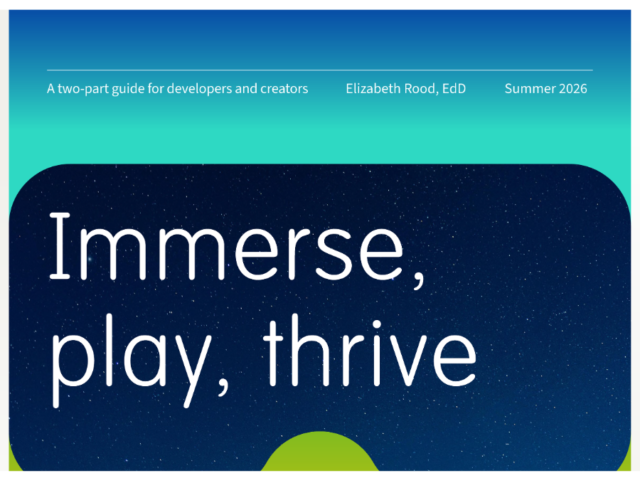
On July 21, I had the pleasure of sitting down with David Kleeman, Azi Jamalian, Asante Asiedu, and Jesse Schell to talk through the challenges and opportunities of making quality kids immersive media (including virtual reality with headsets and mixed reality where the digital is overlaid on the real world). The occasion was a panel at Games for Change, coinciding with the recent release of two guides from the Joan Ganz Cooney Center: Immerse, Play, Thrive: Designing VR Games to Promote Wellbeing and Potential Power: Developing Quality Immersive Content for Tweens and Teens, both generously funded by Meta.
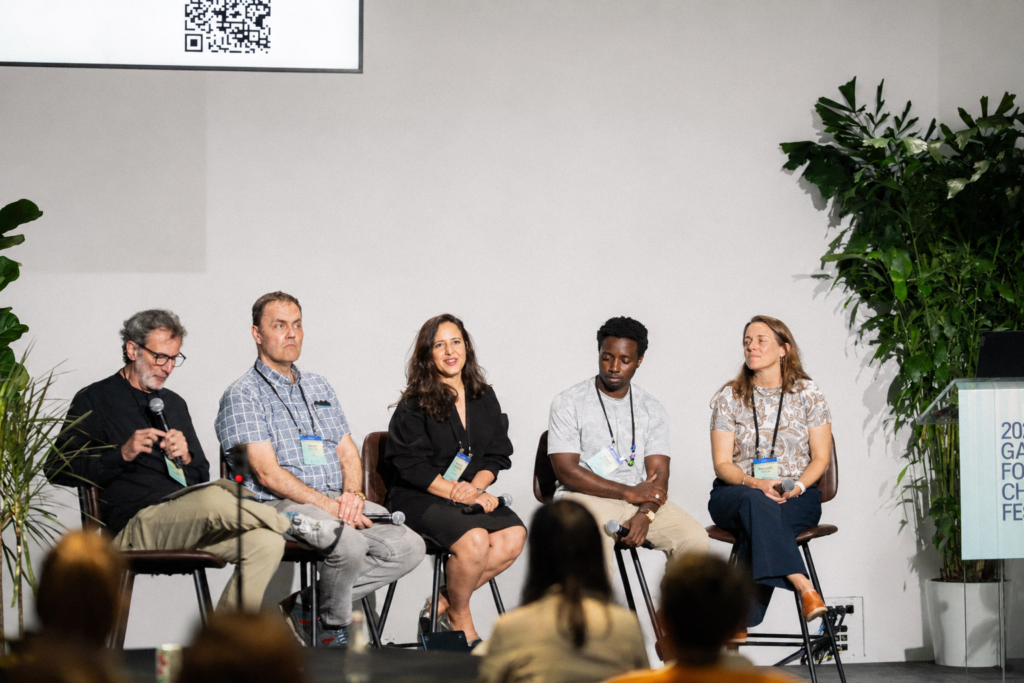
David gracefully moderated our discussion, drawing on his many years tracking trends in kids’ media. He pointed out that XR has been called the ‘next big thing” for a while but has struggled to break through, despite its promise. He noted that his company, Dubit, spent three years researching whether the industry-standard 13+ age rating on VR was really warranted, and found it was largely an abundance of caution: kids engaged with it just fine, with no medical issues, and headsets have since come down to a much more accessible price point. He invited us to consider what it would take to build trust from families and sustained interest from kids.
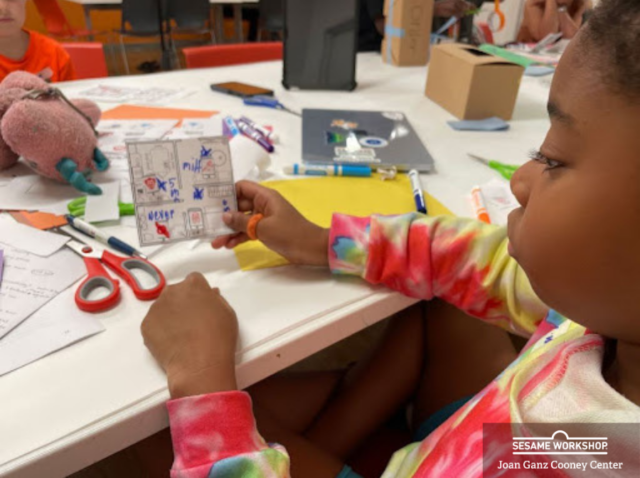
Azi shared about her team’s work co-designing with eight kids ages 10 to 14 over three days at The Giant Room—first having them play existing games on the Horizon platform, then imagining new ones of their own. She described how kids talked about a real sense of presence in VR: feeling physically present in the environment, identifying with their avatar as an extension of themselves, and experiencing their avatar’s interactions with others as genuine social connection. One game the kids designed, “Seven Years of Bad Luck,” dropped players into a cursed underground city after breaking a mirror—full of small immersive details, like rusty knives and expired energy bars, meant to heighten that sense of presence. She emphasized how kids’ ideas centered social play (distinguishing “party games” played with friends over from “family games” played with parents, and imagining “game hopping” with friends the way you might go bar hopping). They wanted games to run the emotional gamut (fear, darkness, and challenge alongside chill, relaxing moments—not just happy and silly). For the kids, opportunities for customization and choice-making are paramount.
Asante shared how his company, Udeesa, focuses on bringing high engagement learning to youth and families—building an editor tool with guardrails so kids can explore and create without generating anything inappropriate. He credited the Cooney Center’s Well-Being by Design fellowship as one of the most impactful programs he’s been part of, and connected to a key insight from the guides: content that inspires interest-driven learning will build parent commitment and trust.
Jesse shared his studio, Schell Games’, experience making games—both immersive and 2D—including an early VR project with the Smithsonian’s Dinosaur Hall that fostered communication between the child wearing the headset and family members watching from outside it. He offered great wisdom for deciding when an experience should be made in VR: does it have something to do with the body? Does it need embodiment? If so, VR is the ticket. If not, stick to 2D.
We ended the discussion thinking through how to measure success with immersive experiences. The panel agreed that KPIs tracking minutes played is not aligned to young players’ well-being. As I put it on stage, we should be measuring success not by how many minutes a kid played, but by how many years they wanted to keep coming back to the same experience. Asante echoed this, pointing out the benefit of designing shorter experiences with natural exit points.
We ended with wisdom from panelists’ experiences designing and researching XR for youth: companies can support well-being by designing brief immersive experiences that tap into kids’ emotions, relationships, and agency, helping them explore, connect, and learn. Success can be measured by kids’ desire to return to an experience over time because they find it valuable and enjoyable.