What do kids have to do with the 500 billion dollar video game industry?
Here at the Joan Ganz Cooney Center, we recognize that for so many young people, online play is the new digital public square. It’s where friendships form, identities take shape, creativity unfolds, and communities come together. Digital play increasingly functions as social infrastructure – where children explore interests, solve problems, and practice navigating digital life.
But children are rarely considered explicitly in the design of games built for “all ages,” even though we know that kids are playing some of the most popular video games on the market. That gap has consequences – not only greater exposure to risks, but also missed opportunities to support learning, confidence, belonging, and self-expression. What kind of attention should the video game industry be paying to younger players?
On October 15, 2025, we had the privilege of hosting a special community event with the Thriving in Games Group (TIGG) to explore these questions. TIGG is a global nonprofit that unites hundreds of game studios and developers worldwide who share a mission of helping players, communities, and developers thrive. Through the Digital Thriving Playbook, a free resource designed in collaboration with the Cooney Center, TIGG helps designers build game communities that are safe, inclusive, and designed for thriving. TIGG emphasizes that cultivating healthy online communities is not just about preventing harm; it’s about creating the conditions for connection, creativity, and joy. Designing for thriving means embedding opportunities for growth, agency, and positive relationships, enabling play as a source of well-being and community.
We were delighted to welcome a full house of game designers, trust & safety leaders, product owners, researchers, and advocates eager to discuss how the industry can foster healthier, more joyful digital play environments. They represented organizations like Google, Meta, Microsoft, Rockstar Games, NYU, and ESRB. When Michael Preston invited the audience to raise their hands if they worked on products for children, only a handful of people did so – mostly from our own team! Convenings like this are the perfect opportunity to share the stage with like-minded colleagues within the gaming and tech sectors who are committed to creating healthy and positive digital environments.

TIGG Executive Director Matt Soeth kicked off the afternoon by moderating a conversation with Patricia Noel (Global Lead, Mental Health & Wellbeing, Discord) and Joi Podgorny (Marketing & Partnerships, GGWP) focused on designing for belonging, promoting prosocial play, and supporting mental health in gaming. According to Noel, Discord surveyed more than 1200 users 13-35+ and found that 66 percent said they play games to support their mental health. Podgorny discussed the importance of community management and ensuring that design teams understand how every choice – from art direction to interaction design – shapes the culture of gaming communities, especially for teen players.
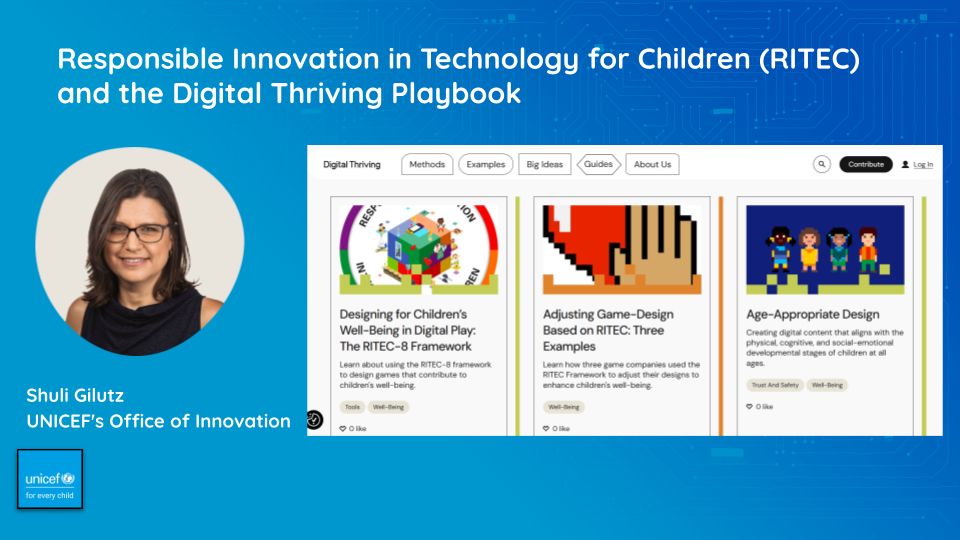
The convening also celebrated new contributions to the Digital Thriving Playbook created by UNICEF in collaboration with TIGG and the Cooney Center. Grounded in the Responsible Innovation in Technology for Children (RITEC) initiative, these articles bring the RITEC-8 framework and Design Toolbox to a wider audience. RITEC expands on traditional safety approaches by centering children’s subjective well-being and helping creators intentionally design for positive experiences. The Design Toolbox translates the research into practical tools for product and UX designers, researchers, managers, and trust & safety teams.
Each article supports designers in a distinct way:
- The RITEC Overview introduces the framework and its eight well-being dimensions, offering practical entry points for design teams to embed children’s perspectives into their workflows.
- The Case Studies highlight how designers have applied RITEC principles to real games, illustrating the process of translating research into practice.
- The Age-Appropriate Design Guide helps creators tailor experiences and interfaces to different developmental stages while maintaining player agency and inclusion.
Shuli Gilutz, who leads the RITEC project at UNICEF’s Office of Innovation, joined virtually to introduce the materials and shared why centering children’s well-being, not just their protection, is core to UNICEF’s approach.
Real-World Design in Action
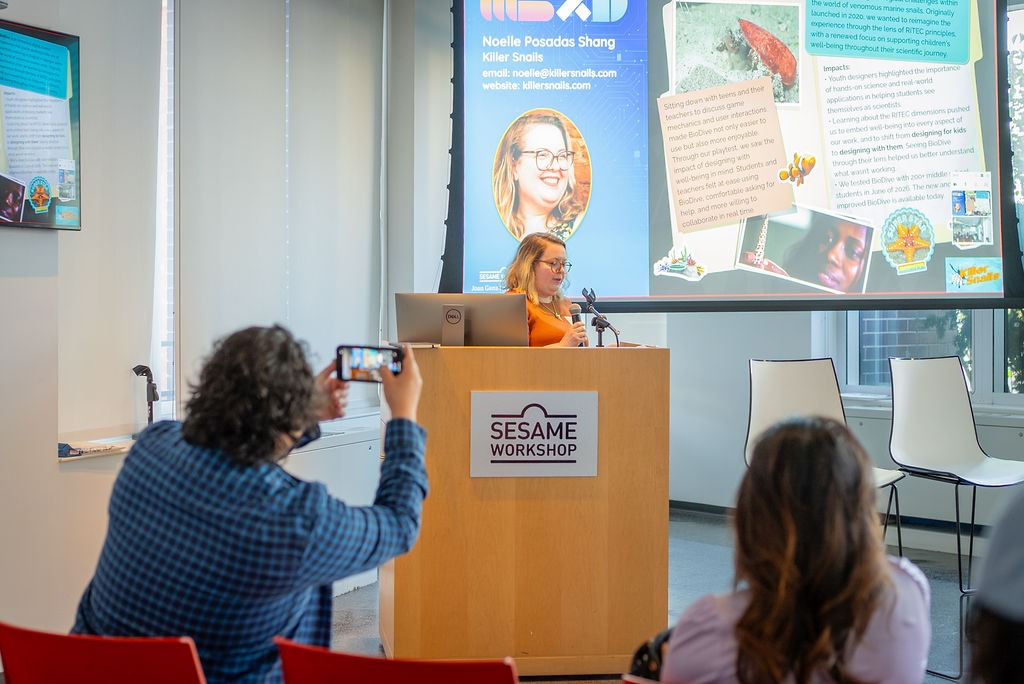
These frameworks come to life through the work of designers like Noelle Posadas Shang, Design Director at Killer Snails and a 2025 Well-Being by Design Fellow. Noelle shared how she applied RITEC principles – including Identity, Autonomy, and Competence – to refine BioDive, an educational game that helps kids see themselves as scientists. She shared how small but thoughtful shifts in language, narrative agency, and character representation led to meaningful results. When tested with students in New York City, players showed greater engagement, confidence, and enthusiasm – a clear example of how centering well-being can elevate both experience and impact.
Continuing the conversation
The afternoon closed with some very thoughtful questions from the audience. How do you balance fun and learning through game mechanics? What impact does the medium have on the experience, and how does the RITEC framework apply to virtual or immersive reality environments?
We are delighted that interest in RITEC continues to grow well beyond teams designing specifically for children. Children are here, they’re playing, and they deserve digital worlds that help them learn, grow, and belong. We are grateful to TIGG and its global developer community for advancing this work, and to the creators already putting these ideas into practice. Together, we can help ensure digital play is joyful, safe, and thriving by design.
Learn More
- Explore the RITEC Design Toolbox
- Read case studies from Well-Being by Design Fellows
- Visit the Digital Thriving Playbook