Reflecting on my first Bett UK experience on the flight home, I found myself holding two very different impressions in my head at once. On one hand, the sheer scale is hard to describe: roughly 37,500 edtech devotees circulating through the enormous halls of ExCel London. We were there to spend fleeting moments or perhaps actual quality time with more than 600 “solution providers” spanning everything from classroom hardware and assessment engines to robots and road cases — all accompanied by the constant hum of demos, pitches, panels, and spontaneous conversations.
Unsurprisingly, AI was everywhere — whether deeply embedded in products or tantalizingly appended to product names, often optimistically branded as “transformational.” Navigating education technology these days seems to be as much about discrete solutions for problems as about an entire ecosystem trying, sometimes awkwardly, to respond to the very real pressures educators and students are feeling right now… and likely introducing some new ones along the way.
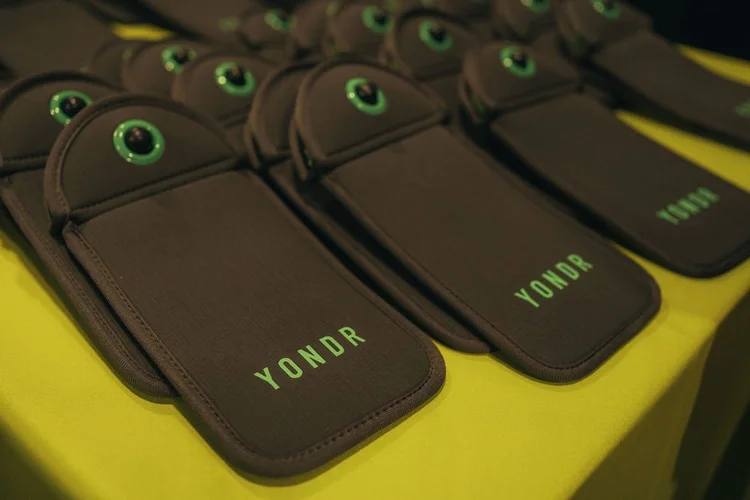
In sharp contrast to the roar of the main floor, one of the most grounding experiences was spending three hours at The Table, a hackathon-style convening co-designed and co-led by young people from Beyond Youth Board and the FlippGen Digital Rebels. They brought together policymakers, platform representatives, mental health professionals, educators, parents, and, of course, young people themselves, to grapple with digital safety. Rather than seeking consensus, the agenda focused on surfacing the tensions inherent in most digital experiences, holding complexity by embracing both positives and negatives. We were reminded that our challenges aren’t primarily technical, but also social, cultural, and deeply human. Oh, and we locked our phones away for the duration. Somehow, everyone survived — and we genuinely enjoyed it.
and Amanda Slavin (Learning Economy Foundation)
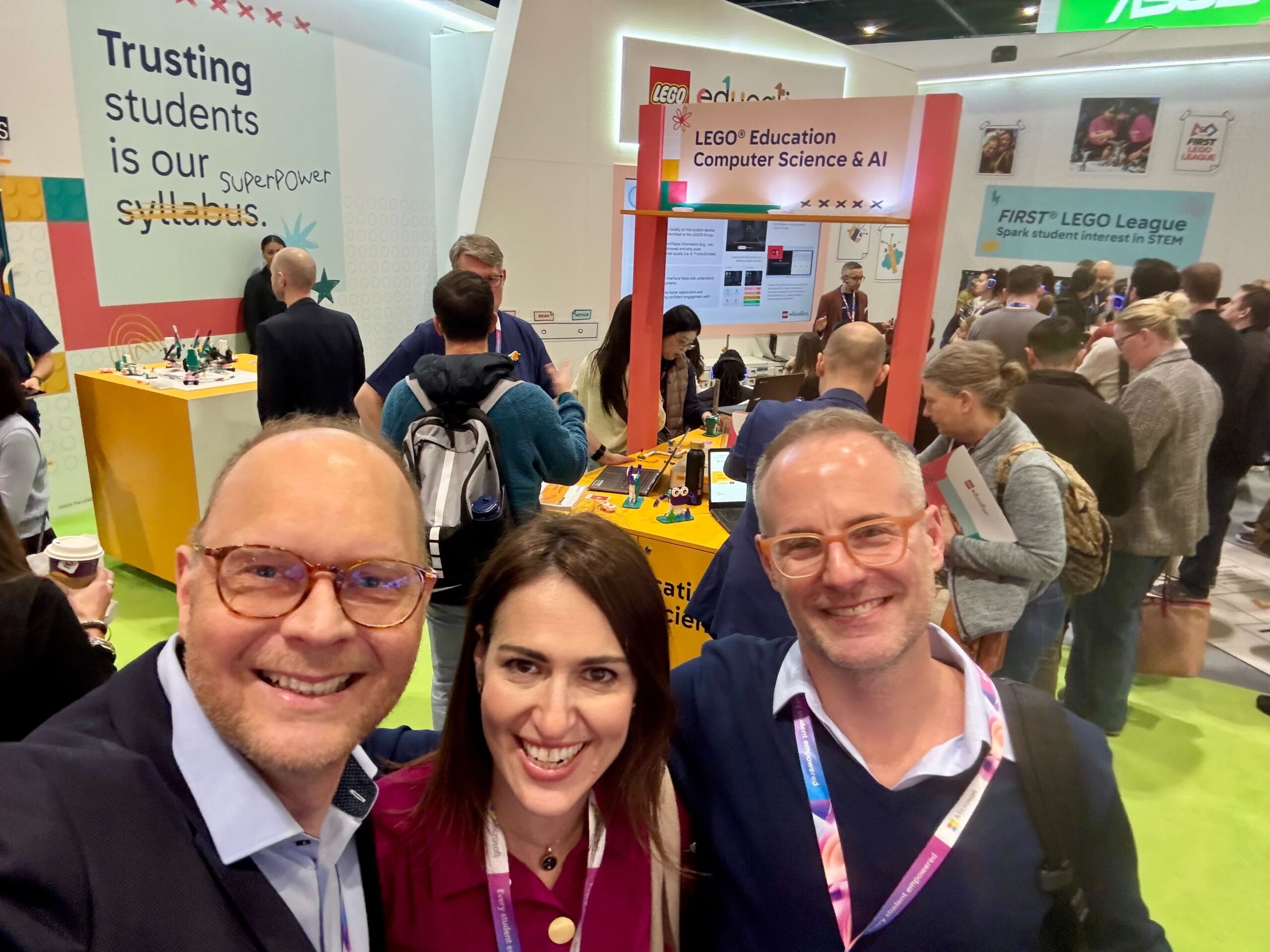
Another highlight was spending time with the LEGO Education team and playing with their new computer science and AI kits for grades K–8. I appreciated how deliberately AI is treated as a branch of computer science — grounded in ideas like data quality, probability, sensors, and algorithmic bias — rather than as a magical or anthropomorphized “black box.” With all computation happening locally in the classroom, it was a reminder that rigor and fun can occupy the same package. Thoughtful design can make complex ideas tangible, playful, and genuinely accessible for both students and teachers.
I was also grateful to be invited to an evening reception hosted by the International Centre for EdTech Impact. The gathering brought together edtech leaders, funders, investors, and policymakers to explore how evidence of learning impact is increasingly becoming a marker of leadership in the field. Framed by remarks from Natalia Kucirkova, Professor at The Open University and Director of the Centre, Kari Nessa Nordtun, Norway’s Minister of Education, and Frank van Cappelle, head of UNICEF’s Global Learning Innovation Hub, the conversation focused on what it actually takes to bridge research and practice at scale. It was a vital look at how stronger evaluation and cross-sector collaboration can ensure innovation delivers benefits for learners, particularly those most often left at the margins.
Of course, Bett is far too large to experience whole, and I knew that many meaningful conversations were happening just out of my orbit. Our colleague Barbara Pape shared reflections from the theatre at Bett’s SEND Village (a dedicated space focused on special education and neurodiversity) where sessions on inclusion data, co-creation, and what one speaker called “critical love” in AI design centered belonging and dignity as non-negotiable. While the tools change quickly, the questions that matter most — particularly around who is seen, supported, and served — remain remarkably consistent.
I’m not sure I’ve seen the future of education, but I’ve seen many futures being tested. The ones grounded in evidence, children’s perspectives, and authentic engagement were the ones that stood out.