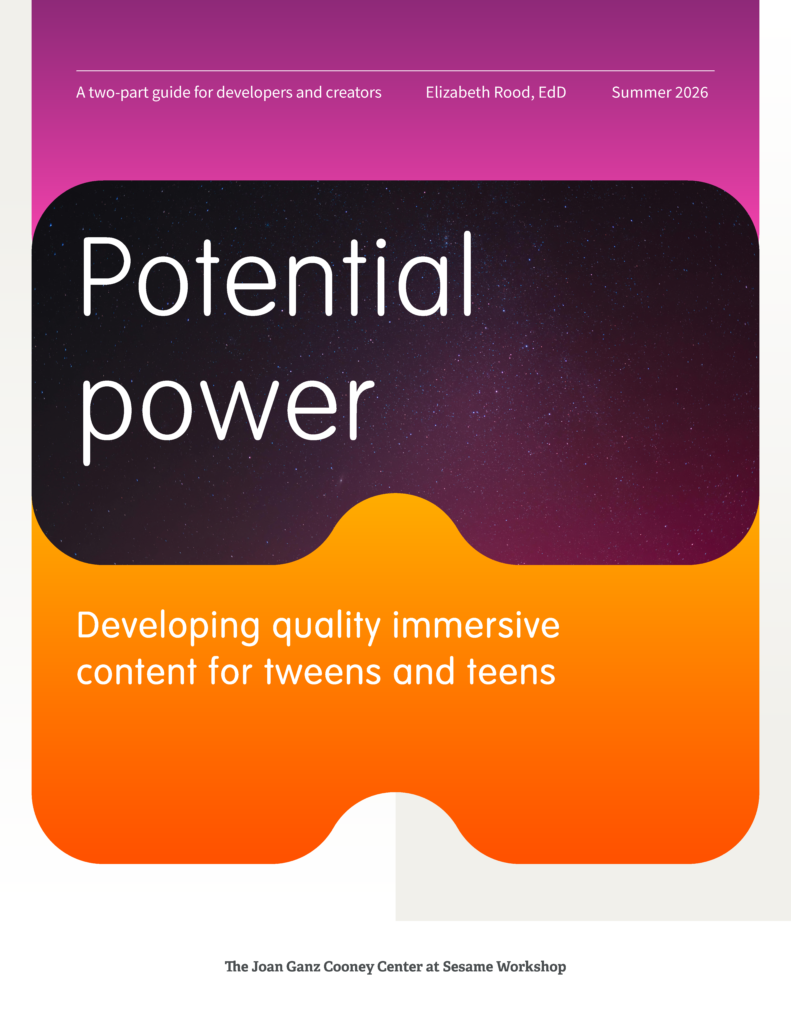
As VR and mixed reality technologies reach younger audiences, developers are making decisions that will shape how immersive media influences children and adolescents for years to come. What kinds of experiences will help young people learn, create, connect, and thrive? And how can developers design immersive content that is both compelling and beneficial?
Potential Power explores how immersive experiences can support positive youth development through thoughtful content design. Drawing on co-design sessions with tweens and parents, conversations with VR developers and researchers, as well as insights from the learning sciences and youth development, this guide offers practical recommendations for creators building VR and MR experiences for preteens and teens.
The report focuses on three key areas where immersive content can offer educational and developmental value:
- Creativity — supporting imagination, customization, experimentation, and open-ended play
- Interest-driven learning — helping young people explore passions, deepen curiosity, and engage with meaningful learning experiences
- Digital citizenship and media literacy — fostering safe, constructive participation in online communities and helping youth build critical digital skills
Featuring a foreword by Jeremy Bailenson, founding director of the Virtual Human Interaction Lab, Potential Power addresses some of the tensions and trade-offs developers face in designing for younger audiences, including concerns around safety, overstimulation, moderation, and meaningful engagement. Rather than viewing immersive media as entertainment, this guide challenges creators to think broadly about the educational and developmental possibilities of VR and mixed reality.
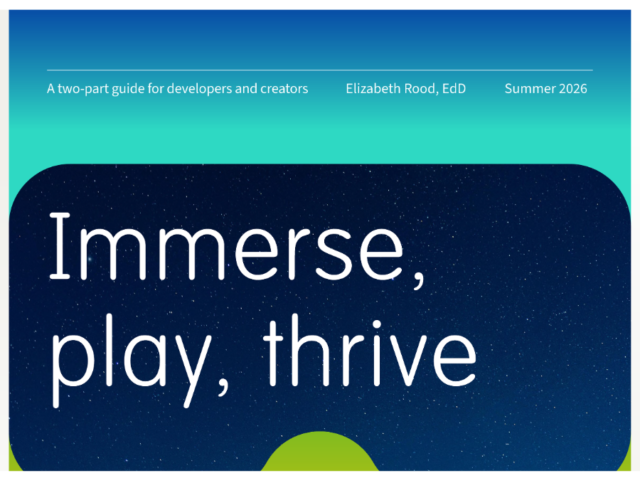
This publication is part of a two-part series for developers and creators exploring the future of immersive media for children and adolescents. Together, the guides examine how immersive technologies can be designed to prioritize well-being, creativity, learning, and positive youth development. Read Immerse, play, thrive: Designing VR games to promote youth well-being here.