Virtual reality is no longer a technology of the future. For a growing number of children and teenagers, immersive experiences are becoming part of everyday play, learning, creativity, and social connection.
As VR and mixed reality technologies become more accessible, developers have a unique opportunity—and responsibility—to shape how these experiences influence the next generation. The choices made today about what immersive experiences young people encounter, how those experiences are designed, and what values they promote will have lasting implications for youth well-being.
At the Joan Ganz Cooney Center, we believe that the conversation about immersive technology must move beyond questions of adoption and engagement. The more important question is: What kinds of experiences should we be building for young people?
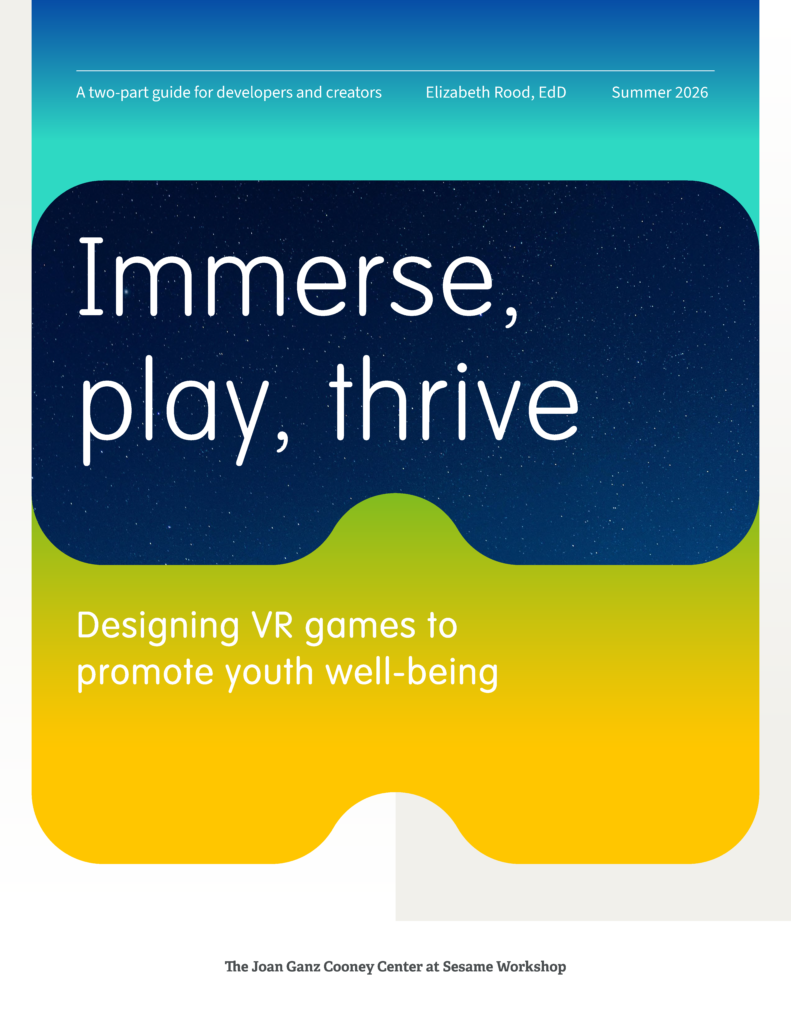
To help answer that question, we are pleased to release two new guides for developers and creators:
Together, these reports offer a roadmap for creating immersive experiences that are not only engaging, but also developmentally supportive, educationally meaningful, and aligned with the needs of young people and their families.
Why This Work Matters Now
Conversations about children’s technology use are often framed around risks. Parents worry about excessive screen time, exposure to inappropriate content, online harms, and the impact of digital experiences on mental health and development. These concerns are real and deserve attention.
At the same time, focusing solely on risk can obscure another important reality: when designed thoughtfully, technology can create meaningful opportunities for learning, creativity, exploration, and connection.
History offers an important lesson. More than 50 years ago, concerns about the quality of children’s television inspired the creation of Sesame Street, demonstrating that media designed with children’s developmental needs in mind could both educate and entertain. Today’s immersive technologies present a similar moment of possibility.
Rather than asking whether young people should engage with immersive technologies, we should be asking how these technologies can best serve them.
A Framework for Positive Design
The two reports approach this challenge from complementary perspectives.
Immerse, Play, Thrive focuses on how immersive games can be designed with youth well-being in mind, exploring how immersive experiences can support three fundamental developmental needs:
- Emotional growth and self-understanding
- Meaningful relationships and social connection
- Autonomy, agency, and self-expression
Drawing on research, co-design sessions with tweens and teens, and conversations with parents, the report offers recommendations for designing experiences that help young people flourish.
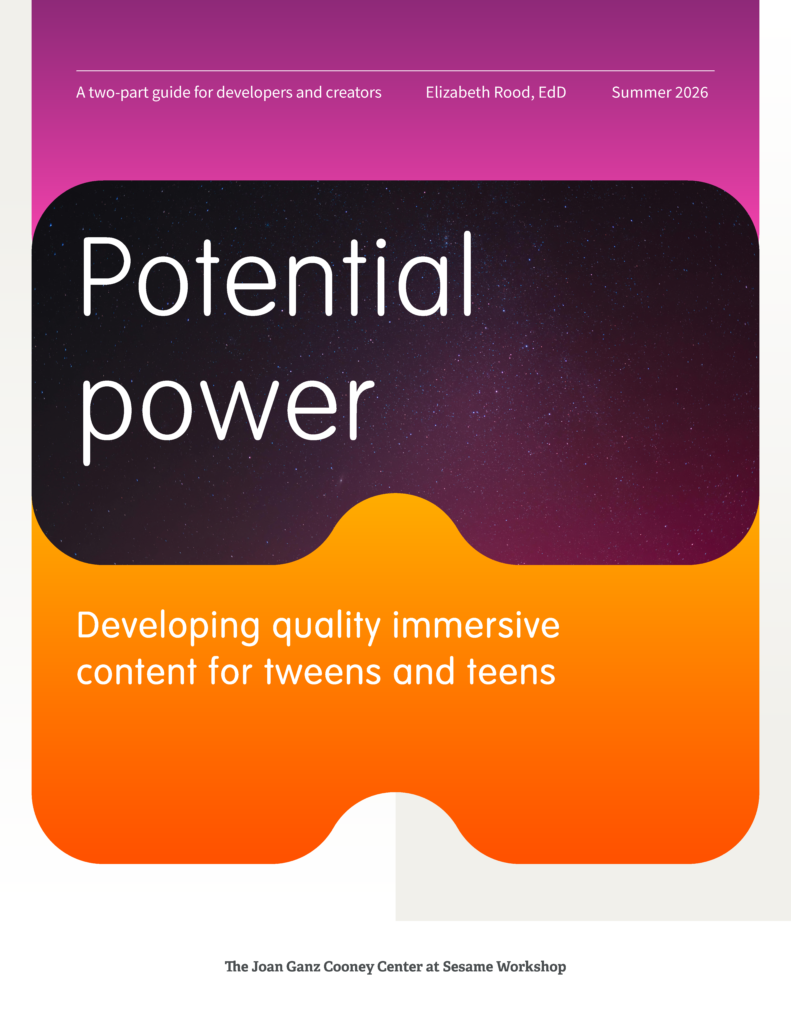
Potential Power focuses on content, identifying three areas where immersive experiences can offer meaningful educational and developmental value:
- Creativity
- Interest-driven learning
- Digital citizenship and media literacy
The report encourages developers to think broadly about what educational value means—not simply formal instruction, but experiences that help young people build skills, competencies, curiosity, and understanding that extend beyond the digital world.
Together, the reports argue that immersive experiences are most valuable when they support both positive development and meaningful content.
Listening to Young People and Families
A central insight across both reports is that young people and parents want more from immersive technologies.
Parents in our research expressed enthusiasm about the possibilities of VR and mixed reality. They imagined experiences that could spark curiosity, foster creativity, expose children to new cultures and perspectives, and support meaningful learning.
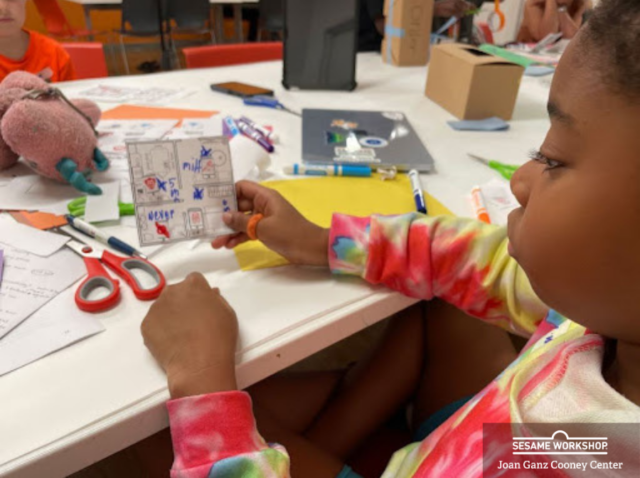
Young people, meanwhile, imagined worlds where they could solve mysteries across time, explore distant places, build new inventions, experiment with scientific concepts, and create entirely new environments of their own.
Their shared vision stands in contrast to the assumption that immersive technologies must prioritize novelty, competition, or endless engagement to succeed. Families are asking for experiences with purpose.
Designing for Well-Being Is Designing for the Future
The immersive ecosystem is still young. Many of the norms, expectations, and design patterns that will shape children’s experiences have not yet been established. That creates an important opportunity.
Developers can choose to build products that optimize primarily for attention and time spent. Or they can choose to create experiences that support healthy development, encourage exploration, strengthen social skills, and help young people discover new interests and capabilities.
The latter path is not simply a moral choice. It is also a strategic one. As parents become increasingly discerning about the technologies their children use, trust, transparency, and demonstrated value will become essential to long-term success.
Young people deserve immersive experiences that respect their developmental needs, support their well-being, and help them build skills that matter both online and off.
Looking Ahead
Immersive technologies have extraordinary potential. They can transport young people across time and space, allow them to embody new perspectives, experiment with ideas that would otherwise be impossible, and create opportunities for learning and connection unlike any medium before them.
Whether that potential is realized depends on the decisions made by today’s developers, designers, researchers, educators, and platform leaders.
We hope these two guides help move the field toward a future in which immersive technologies are designed not only to entertain young people but also to help them learn, create, connect, and thrive.
Download the reports: