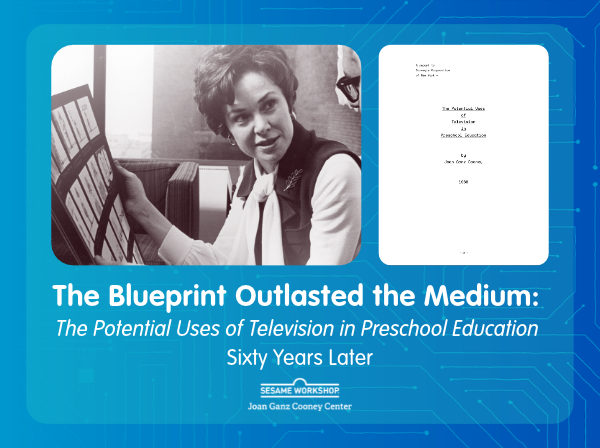
The Potential Uses of Television in Preschool Education introduced a new way of working: researchers, educators, writers, producers, and children came together to shape what to teach, how to teach it, and how to know whether it worked. Sixty years later, we revisit this seminal report with a new weekly series, The Blueprint Outlasted the Medium: The Potential Uses of Television in Preschool Education, Sixty Years Later.
This week, our contributors return to that model and the enduring idea that the best children’s media is built through cross-disciplinary collaboration, grounded in research, and shaped by children themselves.
For all the accolades Sesame Street has won since it was created almost six decades ago, I’m struck by something that’s often forgotten by the show’s admirers: Joan Ganz Cooney, Lloyd Morrisett, Harvard’s brilliant Gerald Lesser, and visionary producer-writer Jon Stone built Sesame Street by convening a series of seminars that brought together the nation’s leading creators of children’s entertainment—including Jim Henson and Maurice Sendak—with the country’s foremost curriculum experts and early childhood researchers to determine what the show should teach and how it could teach it. Educators weren’t allowed to tell the writers what jokes to write (though good ideas were always welcome), and the writers had to listen when educators specified learning objectives and effective strategies to help children master them. Joan Cooney laughingly called this “an arranged marriage,” but, as she wrote in her foreword to Gerry Lesser’s Children and Television, “to the amazement and near disbelief of outside (and even some inside) observers, the courtship went smoothly, if not always lovingly, and the marriage has been a howling success.”
“A howling success” indeed. The “CTW model,” as this collaborative process came to be known, still guides Sesame Street today, and the relatively few television series that have faithfully implemented it have repeatedly demonstrated significant educational impact. The Workshop’s The Electric Company, 3-2-1 Contact, and Square One Television; Angela Santomero’s Blue’s Clues!; and our own Between the Lions are preeminent examples.
Until Joan wrote her landmark report in 1966, people widely viewed television as an impediment to children’s education. But she and Lloyd saw something different: if children could effortlessly absorb advertising jingles, they reasoned, the medium Newton Minow called “a vast wasteland” had the potential to become one of the most powerful educational tools ever devised.
So… Why doesn’t the Cooney Center convene an updated version of the seminars that Gerry Lesser so brilliantly led while Sesame Street was being developed? Invite the nation’s best children’s writers, illustrators, game designers, interactive storytellers, and, yes, television and video producers (legacy media still has an important role to play!), and bring them together not only with leading early childhood educators and researchers, but also with experts in educational technology, cognitive neuroscience, artificial intelligence, and child-centered design. Then present an updated version of the very question posed to attendees in the late 1960s: Given everything we now know about the digital media ecosystem surrounding young children—and what it does especially well—how can we harness it to help every child reach their fullest potential?
What better way to celebrate the 60th anniversary of this seminal report.
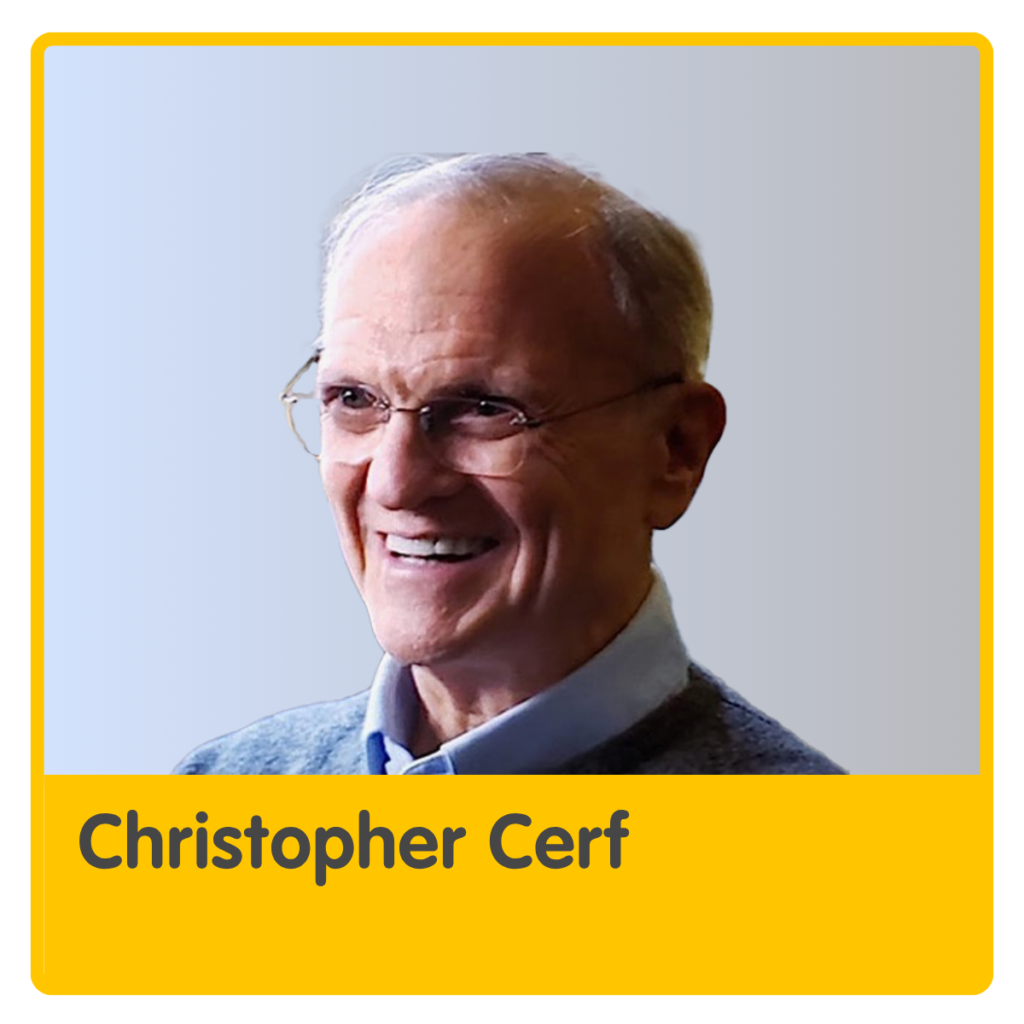
Christopher Cerf is a writer, composer-lyricist, voice actor, and record and television producer. He has contributed music to Sesame Street, and co-created and co-produced the PBS literacy education television program Between the Lions.