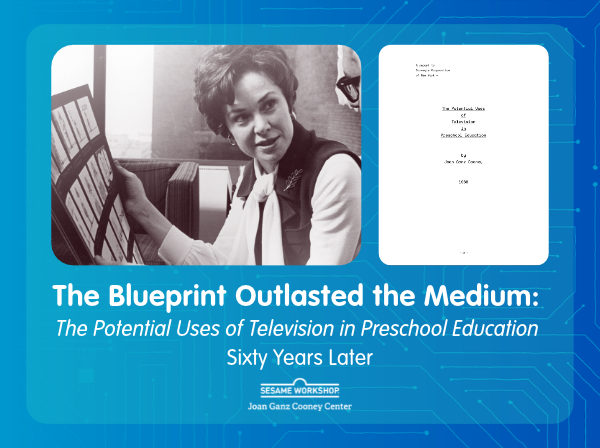
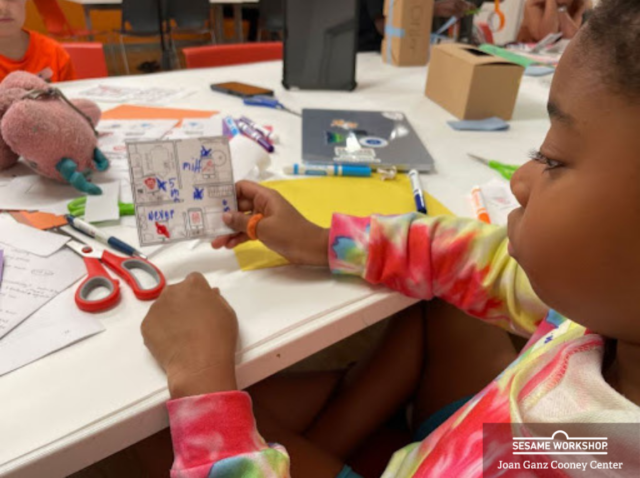
Joan Ganz Cooney understood that children’s media does not exist in isolation. Parents, caregivers, and teachers help children connect what happens on screen to the world around them. This week, our authors consider the role of the caring adult in a media landscape that is increasingly personalized, pervasive, and difficult to navigate—and how technology can support, rather than replace, human connection.
Sixty years ago, Joan Ganz Cooney asked an urgent question that, perhaps surprisingly, we are still asking today: “How can children learn from emerging technologies?” She asked it for many of the same reasons we do today: the importance of early childhood, the development of critical skills, the need to reduce inequalities, and the role of child-parent communication.
Having been a child in 1960s Britain, I recall vividly how Watch with Mother, the BBC’s preschool programming, which began broadcasting in the 1950s following the 1920s radio show Children’s Hour, was loved across the nation for its storytelling, puppetry, and songs. Engagingly participatory, gently inclusive and strongly child-centred, Watch with Mother ensured that John Reith’s original mandate for public service broadcasting—“inform, educate, entertain—was realised for even the youngest children.
In 1958 Hilde Himmelweit’s famous UK research, Television and the Child, closely followed in the US by Schramm, Lyle and Parker’s Television in the Lives of Our Children in 1961, showed that in and of itself, television was neither good nor bad for children. Their research found that the outcomes of viewing depended on the child, their circumstances and, crucially for Joan Ganz Cooney, the nature of what they watched. These pioneers therefore agreed, as we do today, that benefiting preschool children requires understanding child development, researching everyday media use in the family, and investing in tailored content. For children the world over, Sesame Street has not only succeeded in integrating these three elements to benefit children, but it has inspired broadcasters and content creators in many countries to find new and better ways to scaffold children’s learning.
Writing in 2026, what is striking is that technology innovates, but societal challenges persist. Today as always, we must seek to understand child development, inquire into children’s life circumstances, promote critical literacy, encourage imagination and play, support parental mediation, and invest in content that benefits all children.
Metaphors are powerful. Sixty years ago, perhaps by contrast with cinema’s “dream factory,” television was seen as a “vast wasteland.” No wonder Joan Ganz Cooney determined to cultivate a richer media environment for children. Today, the internet is seen as “the Wild West” and AI is its newest “frontier.” Now we are determined to find new ways to ensure it is safe and enriching for children. To me, this means respecting children’s rights, listening to their concerns and ideas, and following Joan Ganz Cooney in designing with children’s needs in mind.
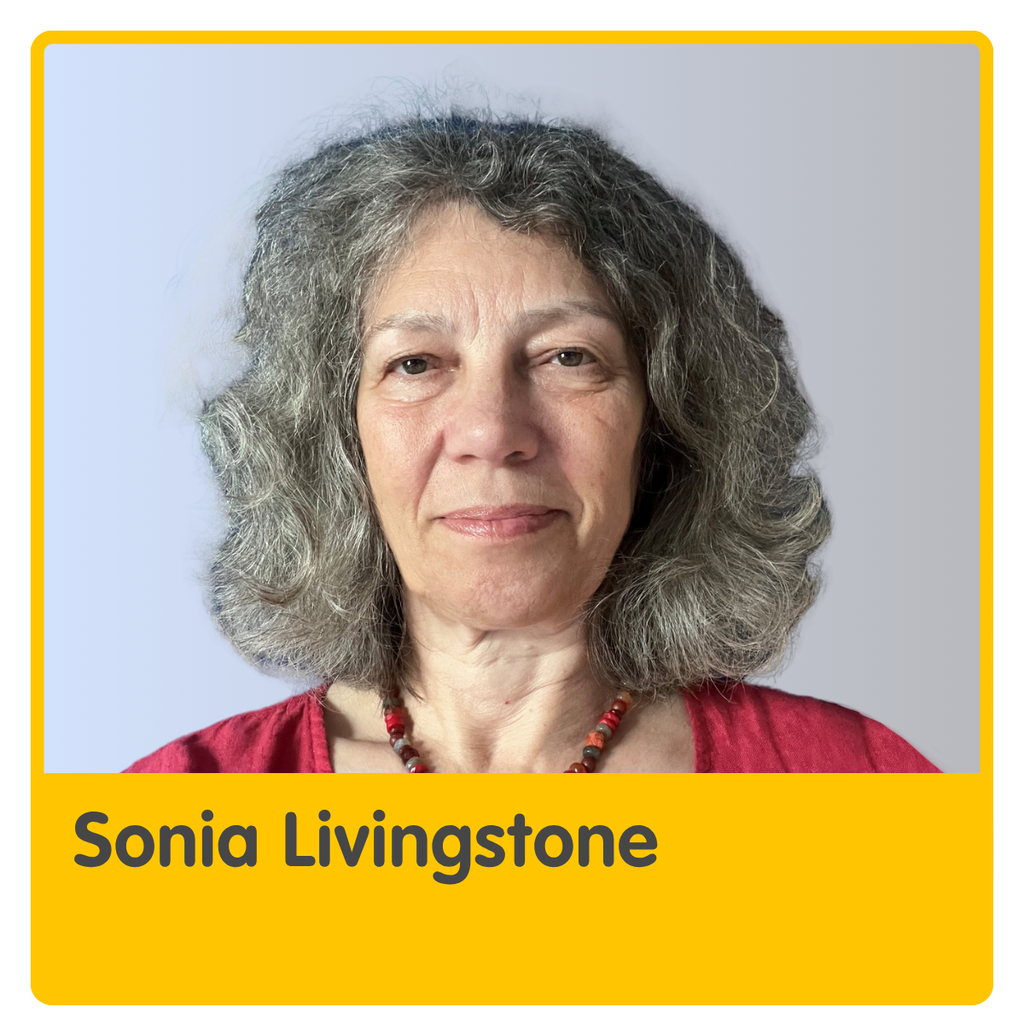
Sonia Livingstone OBE FBA is a professor of social psychology, Department of Media and Communications, London School of Economics and Political Science. She has published 23 books, advises on children’s rights in the digital environment, and leads the Digital Futures for Children centre at LSE with the 5Rights Foundation.