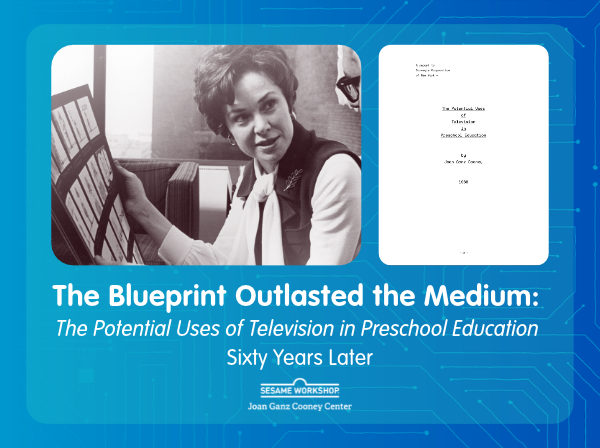
In the 1960s, FCC Commissioner Newton Minow famously called the television landscape “a vast wasteland.” With the rise of algorithmically driven video feeds, AI-generated content, and an endless stream of choices, how does today’s media landscape compare? Our contributors consider what it means to pursue quality in an environment shaped by commercial incentives and powerful new technologies—and why retreating from technology isn’t enough.

This chance to reflect on Joan Ganz Cooney’s 1966 report couldn’t have come at a better time. Parents are feeling overwhelmed and exhausted trying to raise children in today’s hyperdigital world. Mindless apps, AI slop, and never-ending videos-on-autoplay steal attention from both kids and adults, day and night. The deluge of distracting media is starting to feel like a tsunami, a crashing wave you can’t escape but want to run from as fast as possible.
But what to do? Somehow retreat to the seemingly higher ground of 20, 30, or 40 years ago? Batten up the windows, block all digital media, and refuse to emerge til the coast is clear? When Joan Ganz Cooney wrote The Potential Uses of Television in Preschool Education, she too was reacting to what felt like a disaster unleashed on young children, as the “vast wasteland” of TV became clearly mesmerizing to preschoolers. It upset her to find that this was happening as evidence mounted of big disparities between disadvantaged children and those whose parents could afford to send them to preschool. Lloyd Morrisett, the Carnegie Corporation official who was Mrs. Cooney’s partner in creating Sesame Street, was disturbed too. He had watched his 3-year-old daughter sit expectantly in front of their living room TV, eyes fixed on nothing other than the station-identification logo before the cartoons started.
But Mrs. Cooney and Dr. Morrisett did not toss out their TVs. (Neither did Fred Rogers, another pioneer who resolved to harness the power of television for good.) What Cooney’s 1966 report shows us is that we should be guided first by research on what helps children learn, examine the affordances of the technology of the time, and not be afraid to try new things. She posed the notion of applying the science of learning to a television program that would show children “how to think, not what to think.”
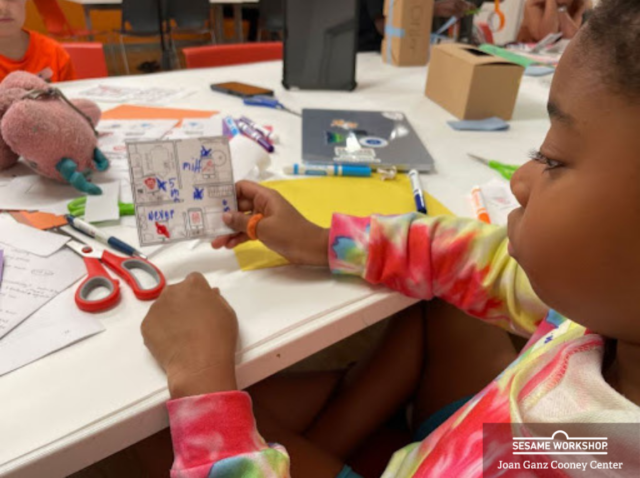
Some of her suggestions didn’t come to fruition. She wanted programs that would “encourage children to turn the television off at the end” so they could do arts-and-crafts and other activities they saw on screen. And she envisioned a 30-minute program for parents. Would we be in a different place today if tech developers followed her suggestions? How could policy and public pressure incentivize more of this type of tech? We need new designs and dissemination strategies to counteract the deluge. Cooney calls us to be clear-eyed about the dangers and unafraid to innovate, looking for new ways to help children grow up happy, healthy, and excited to learn.
Lisa Guernsey is the Senior Director of Birth-12th Grade Policy at New America. She is the Co-Founder and Director of the Learning Sciences Exchange (LSX) project and also leads the National Commission on Learning Ecosystems and the 1939 Library Sit-In Project.