By age 7, children say they’d rather get facts from a smart device than from a teacher, a parent, or a friend.
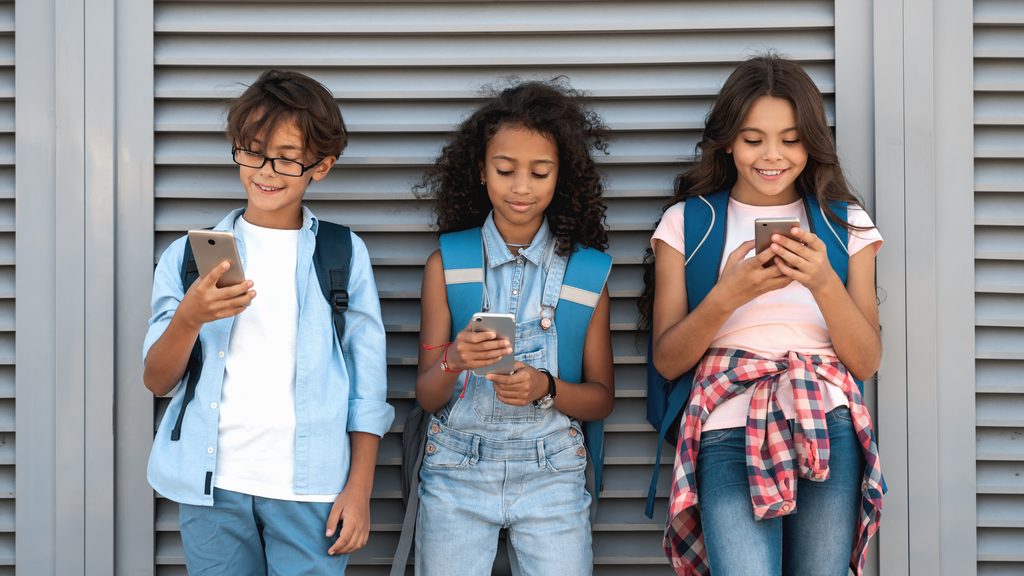
Children learn most of what they know from other people. No child can discover distant lands, exotic animals, or how the human brain works from their own observations alone. But not every source is equally reliable, so a key task of childhood is learning when to trust and when to be skeptical. For most of history, children got there by sizing up the people around them. Now they are also sizing up smart speakers, chatbots, and location trackers.
We are research psychologists who have conducted research with thousands of young children to understand how they figure out when to trust technology and when to be skeptical. Our research has focused on two challenges new technology can pose: the privacy risks of digital devices and how kids learn to navigate the imperfect information devices and AI can provide.
Trust vs. Privacy Risks
Digital devices pose privacy risks throughout a child’s life. Surveillance begins in infancy, with smart baby monitors that collect data through cameras and microphones. So-called “baby tech” is expanding, and the same companies that track infants are planning to continue monitoring through childhood. Applications like Life360 extend this monitoring into adolescence, though the focus may shift (e.g., from monitoring a sleeping baby and tracking its breathing to tracking a teenager’s location). These devices can be incredibly useful, but they also pose privacy risks. Information is often stored on servers, which can be hacked or used to guide purchasing decisions without the user’s knowledge. Even knowing the risks, the benefits can be so tempting that they may outweigh privacy concerns. In the words of one journalist, a video camera that automatically recorded home interactions is: “invasive, creepy, and perfect for a parent like me.”
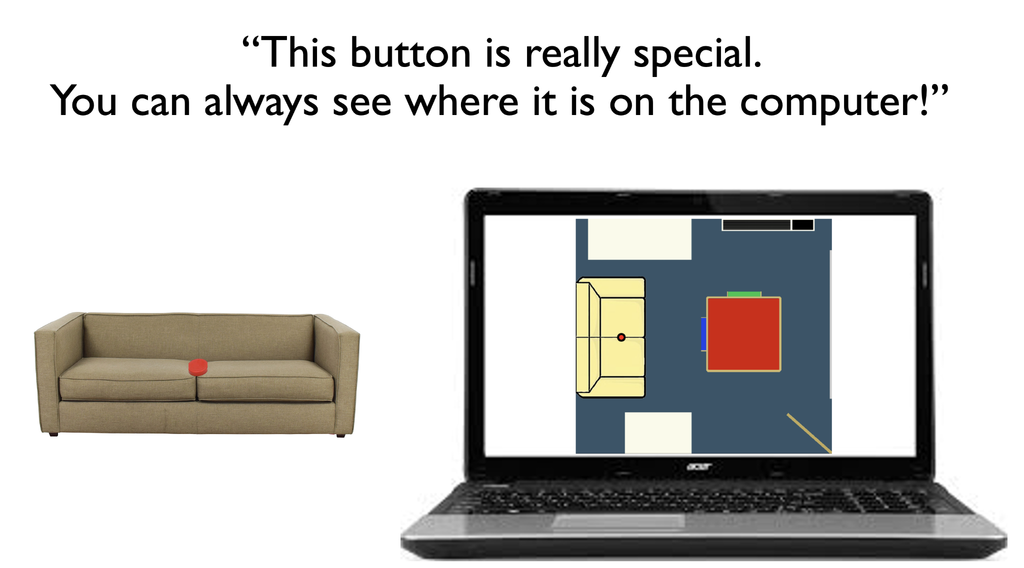
Our own research has examined how children and young adults understand this trade-off. In a series of studies, we taught children ages 4-17 as well as adults about location tracking devices, showed them how such devices worked, and confirmed that our young participants understood that when a tracking device was attached to an item (such as a backpack or a dog’s collar), someone could look on their computer to see where the item was in the world. We then asked participants to judge how acceptable it is for someone to track the location of an item belonging to someone else. We found a sharp developmental shift in their evaluations. Before age 11 or so, children focused almost exclusively on the benefits of digital tracking for finding a lost item, and did not indicate any unease. Similar results were obtained when children were asked about a privacy violation that had no functional benefit for the owner (namely, a stranger viewing another person’s photos that they had stored online). Children also often place the responsibility for what happens with online information on the user, rather than as a fault in the system (“Well if they put it there then they know”). Altogether, young children appear to be quite trusting of digital devices, relatively unaware of the privacy risks they pose, and viewing any such risks as the fault of the user. By contrast, adults were consistently negative about someone tracking others’ items, often framing this behavior as leaving the user vulnerable to dangers such as stealing or stalking, morally questionable (“It’s an invasion of privacy”; “Without permission it’s wrong”), or just unsettling or “weird”.
Trust vs. Imperfect Information.
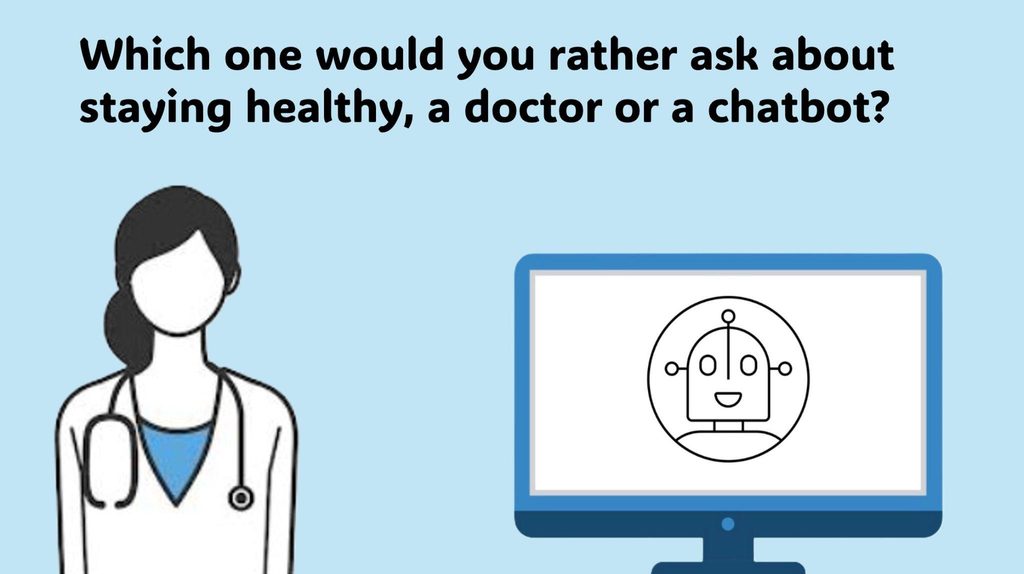
Digital devices, including smart speakers and AI chatbots, are limited informants: they cannot actually “know” information beyond what is placed or programmed by people. Moreover, the information they provide is faulty and prone to hallucinations, while simultaneously seeming official and sounding confident. Yet our research has found that children’s knowledge of how these devices work is limited, and that they place substantial trust in these sources. Our studies have shown that by age 7, children often prefer technological sources to human ones—including peers, teachers, or other adults—when seeking factual information, including science facts, current events, and even predictions about the future. When asked why they make these choices, children focus on technology’s ability to provide answers quickly and access information from a seemingly vast, nearly limitless source: the internet. This high default trust in technology potentially makes children vulnerable: children have sometimes told us that they believe they can be friends with chatbots or that smart speakers can keep their secrets, but they also fail to recognize that information about everyday people can be found online via internet searches, suggesting a breakdown between what they are willing to share and where they think that information can go or how it can be used. For example, a child may share something about themselves with an AI chatbot, not realizing that that conversation is saved and viewable by the very real people who work at the company that makes the chatbot. At the same time, when it comes to personally relevant health questions, children still prefer experts (such as doctors) to an AI chatbot.
Looking to the Future: Questions and Takeaways
This research raises many thorny questions. One such issue is how to balance the value of online information sharing from its risks. Parents may find value in tracking information about their children or sharing their child’s milestones online. But there are costs as well, including to the young person’s understanding of their own autonomy. To date, studies of trust in digital sources have largely focused on the presence of individual “bad actors,” such as strangers. This work leaves open how children think about more abstract entities that have access to this information (such as companies), as well as close others, such as friends and family members. Future research should also explore children’s understanding of more nuanced privacy risks, such as when companies combine information about a user’s behaviors to create a profile, or gather information without user knowledge.
Our recommendation for the future is to help children learn to balance trust and skepticism when thinking about their own behaviors with the digital world. An important step is to teach children where and how their information is shared, and what happens with personalized, conversational technologies “under the hood”. Earlier research with non-digital literacy provides a valuable blueprint, including how to teach children to read (or listen) carefully, and check primary sources for relevance and expertise. At the same time, designers of technological products also bear responsibility. Sharing of information is often a default rather than opt-in, how information is used is hidden from view, and primary sources are unavailable. For children specifically, technology is designed to encourage forming parasocial bonds with appealing or human-like devices, such as baby monitors or virtual assistants for children that look like cute animals.
The digital world provides challenges that are unique in human history: it summarizes rather than cites, it is endlessly personalizable and conversational, and its novelty means we are all learning about how it works and what the consequences of its use are. Best practices now may shift with time, but one thing is likely to remain true: children’s trust in technology and their understanding of their own privacy online will be worth examining, understanding, and protecting.
Lauren Girouard is a National Science Foundation Postdoctoral Research Scholar at Harvard University Graduate School of Education and the University of Michigan and an incoming Assistant Professor of Psychology at The College of New Jersey. Her research focuses on children’s trust in, understanding of, and learning from digital devices.
Susan Gelman is the Heinz Werner Distinguished University Professor of Psychology and Linguistics at the University of Michigan. Her research focuses on language and conceptual development, including how children reason about the digital world.
Sources:
- Gelman, S. A., Cuneo, N., Kulkarni, S., Snay, S., & Roberts, S. O. (2021). The roles of privacy and trust in children’s evaluations and explanations of digital tracking. Child Development, 92(5), 1769-1784.
- Gelman, S. A., Martinez, M., Davidson, N. S., & Noles, N. S. (2018). Developing digital privacy: Children’s moral judgments concerning mobile GPS devices. Child Development, 89(1), 17-26.
- Girouard-Hallam, L., Dizon, L., Gelman, S., Radesky, J., & Xu, Y. (2026). Children Endorse Chatbots, but Prefer Humans, for Health-Related Information. Abstract In Proceedings of the Annual Meeting of the Cognitive Science Society (Vol. 48).
- Girouard, L.N., & Danovitch, J.H. (2026). “I’ve seen Google before!”: Young children’s intuitions about Google’s capabilities. Child Development, aacaf011.
- Girouard-Hallam, L.N. & Danovitch, J.H. (2025). Children’s trust in Google’s ability to answer questions about the past, present, and future. Computers in Human Behavior, 108596. https://doi.org/10.1016/j.chb.2024.108496
- Girouard-Hallam, L.N., & Danovitch, J.H. (2022). Children’s trust in and learning from digital voice assistants. Developmental Psychology, 58(4), 646–661. https://doi.org/10.1037/dev0001318
- Sun, K., Kanchi, R., Ello, F. M. T., Co, L. N., Wu, M., Gelman, S. A., … & Yip, J. (2024, June). “Why is everything in the cloud?”: Co-designing visual cues representing data processes with children. In Proceedings of the 23rd Annual ACM Interaction Design and Children Conference (pp. 517-532).https://doi.org/10.1145/3628516.3655819
- Sun, K., Sugatan, C., Afnan, T., Simon, H., Gelman, S. A., Radesky, J., & Schaub, F. (2021, May). “They see you’re a girl if you pick a pink robot with a skirt”: A qualitative study of how children conceptualize data processing and digital privacy risks. In Proceedings of the 2021 CHI Conference on Human Factors in Computing Systems (pp. 1-34).
- Williams, J., Dizon, L., & Girouard, L.N. (2026, August). “It’s their choice”: Children’s beliefs about online posting responsibility [poster presentation]. American Psychological Association Annual Meeting, Washington, DC.

Lauren Girouard is a National Science Foundation Postdoctoral Research Scholar at Harvard University Graduate School of Education and the University of Michigan and an incoming Assistant Professor of Psychology at The College of New Jersey. Her research focuses on children’s trust in, understanding of, and learning from digital devices.

Susan Gelman is the Heinz Werner Distinguished University Professor of Psychology and Linguistics at the University of Michigan. Her research focuses on language and conceptual development, including how children reason about the digital world.